First Trimester Spotting: Causes, What’s Normal and When to Seek Help
Noticing spotting in the first trimester can be frightening. For many people, any amount of bleeding in early pregnancy immediately triggers worry, particularly if this is a first pregnancy or there has been previous loss.
The reality is that spotting in early pregnancy is relatively common, and in many cases it does not indicate a serious problem. However, bleeding should always be considered carefully, as some causes do require medical assessment. You should contact your GP or midwifery care team if you notice light spotting and are concerned. However, heavier continuous bleeding, particularly if accompanied by clots or pain, should be checked out as a matter of urgency so please do call 111 or 999 to get medical attention straight away.
This article explains why spotting can happen in the first trimester, what is commonly considered normal, when spotting may need further investigation, and how to know when to seek medical advice with spotting.

What is first trimester spotting?
Spotting refers to light vaginal bleeding that is usually:
- Pink, red or brown in colour
- Lighter than a menstrual period
- Often noticed when wiping rather than soaking a pad
Spotting can occur at any point in the first trimester and may be brief or come and go.
Bleeding that is heavier, persistent, or accompanied by significant pain is not considered spotting and should be assessed promptly by a healthcare professional. Depending on whether or not you’ve met with a midwife for a ‘booking in’ appointment, you may choose to call 111 in the UK to find out where to seek that help. You might also attend Early Antenatal Units or in some areas A&E to get support where necessary.
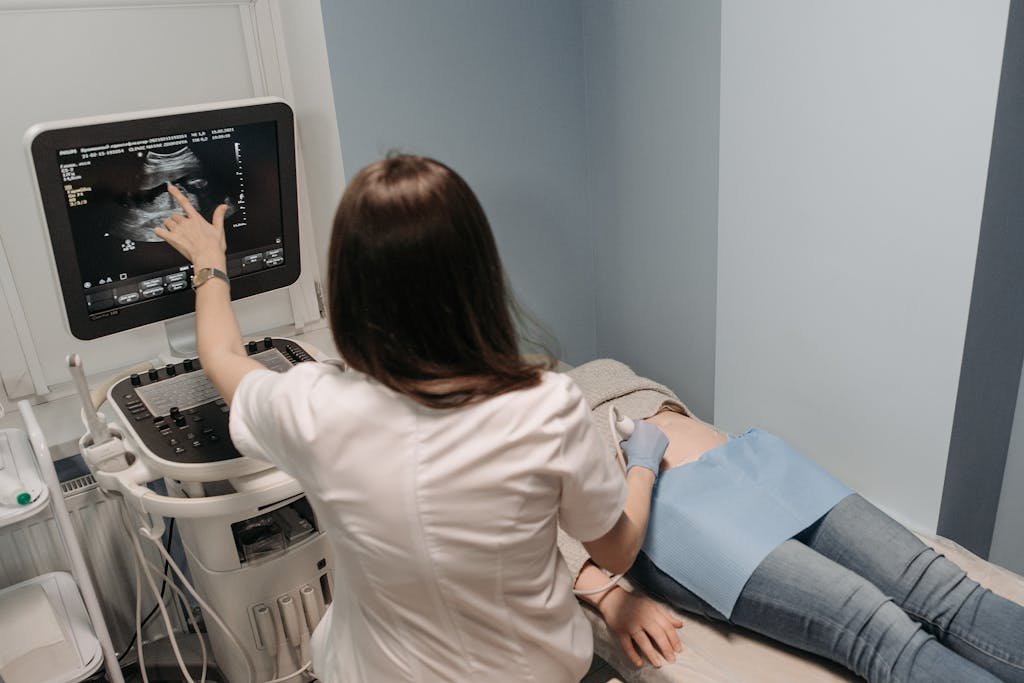
Depending on how far along you are, it’s likely the team will try to reassure you by conducting an ultrasound scan. Sometimes, especially for those attending prior to week 7 when a heartbeat can be found, you may be asked to return for repeat blood test to monitor the hormone levels in your blood, or to simply ‘watch and wait’ if the bleeding stops and wasn’t severe.

How common is spotting in early pregnancy?
Spotting in the first trimester is more common than many people realise. Studies suggest that up to one in four pregnancies may involve some bleeding during early pregnancy. It’s really hard not to worry, but knowing this statistic can be helpful in realising what is and isn’t normal.
Importantly, many of these pregnancies continue without complication. The presence of spotting alone does not predict pregnancy outcome. That said, if you have concerns, seek medical advice.
Common causes of first trimester spotting
There are several reasons why spotting may occur in early pregnancy. Some are fairly normal reasons while others require medical assessment. It’s often difficult to determine for yourself what is normal and not, therefore getting medical advice is recommended, even if this is reassurance over the phone from a trained professional.
Hormonal changes and cervical sensitivity
During pregnancy, increased blood flow and hormonal changes can make the cervix more sensitive. This can lead to light spotting, particularly after:
- Sex
- Internal examinations
- Vaginal swabs
This type of spotting is usually light and short-lived. For internal examinations and vaginal swabs, it’s likely that your healthcare professional will discuss the likelihood of spotting with you before any procedure, so this shouldn’t usually come as a shock.
Implantation-related changes
Some people experience light spotting around the time the pregnancy implants into the uterus. While implantation itself typically occurs earlier than most people realise they are pregnant, spotting around this time is sometimes reported.
Some people are blissfully unaware of what is happening to their body at this stage. For others, particularly those with long fertility journeys, every symptom can matter. Some people can get really in tune with their hormonal cycles and what is and isn’t normal for them, but don’t worry if this doesn’t apply to you and you didn’t see implantation bleeding! Not everybody will and it doesn’t mean there is a problem if you don’t spot this.
Subchorionic haematoma
A subchorionic haematoma is a small collection of blood between the uterine wall and the pregnancy sac. It can cause spotting or light bleeding and is often found incidentally on an early scan.
Many subchorionic haematomas resolve on their own, but monitoring may be recommended. If spotting persists or if bleeding becomes heavier, it’s worth arranging an appointment to get this ruled out.
Infection
Vaginal or cervical infections can sometimes cause spotting. This may be accompanied by:
- Unusual discharge
- Itching or discomfort
- An unpleasant smell
Infections in pregnancy should be assessed and treated appropriately. Seek advice from your community midwife, GP or arrange a consultation by calling 111.

Spotting with cramping: why context matters
Spotting can occur on its own or alongside cramping. Mild cramping in early pregnancy can be normal, but spotting combined with pain should always be considered in context.
Factors that matter include:
- The severity of pain
- Whether pain is one-sided
- Whether bleeding is increasing
- Whether you feel unwell or dizzy
If bleeding is increasing or if you feel unwell or dizzy, you should attend your local urgent care or A&E to be assessed. Pain on one side requires an urgent medical assessment and can be a sign of ectopic pregnancy.
If you are experiencing cramping at around 5 weeks pregnant, you may also find our article Is Cramping Normal at 5 Weeks Pregnant? helpful.
When spotting may need medical assessment
While spotting can be normal, there are situations where it is important to seek medical advice promptly.
You should contact your GP, midwife, early pregnancy unit or local maternity services if:
- Spotting becomes heavier or turns into bleeding similar to a period
- Bleeding is accompanied by strong or worsening abdominal pain
- Pain is localised to one side of the abdomen
- You experience shoulder pain, dizziness or fainting
- You have a fever or feel generally unwell
- You are unsure or worried, even if symptoms seem mild
These symptoms do not automatically mean there is a serious problem, but they should always be checked.
Why spotting causes so much anxiety
Early pregnancy can feel particularly uncertain. Many people have not yet had a scan or appointment, which can make any unexpected symptom feel overwhelming.
Online searches and comparison with others can also increase anxiety. It is important to remember that:
- Spotting does not always mean a miscarriage is happening or has already occurred.
- Symptom severity varies widely and you could be experiencing a normal pregnancy with light spotting.
- Reassurance often comes from assessment, not assumption – seek medical advice from a trained professional, not the internet, if concerned.
What you can do if you notice spotting
If you experience spotting in the first trimester:
- Note the colour, amount and duration
- Pay attention to whether pain is present
- Avoid relying solely on online information for reassurance
- Seek medical advice if symptoms change or worsen
It is reasonable to contact a healthcare professional even if spotting seems light.
Making informed decisions without panic
Spotting in early pregnancy sits in a grey area between reassurance and vigilance. Both can exist together.
Helpful questions to ask yourself include:
- Has the spotting changed in amount or pattern?
- Is there associated pain or other symptoms?
- Would reassurance from a healthcare professional help me feel calmer?
Trusting your instincts and seeking advice when unsure is part of informed decision-making.
You may also find When to Call Your Midwife or Doctor in Early Pregnancy useful for understanding who to contact and when.
Key points to remember
- Spotting in the first trimester is relatively common
- Many causes of spotting are not serious
- Bleeding should always be considered in context
- Spotting with pain or worsening symptoms should be assessed
- Seeking medical advice is appropriate if you are concerned
References and further reading
Read more from Pregnancy Pal
-
One Positive Birth Story (and how it can change everything)
Sometimes, you hear one positive birth story and it stays with you. There’s something unique about someone else’s experience quietly having the power to change the direction of your own story. For Nicole Harwood, it was hearing one woman talk about giving birth at home that planted a seed. Until then, birth had largely been…
-
Early Pregnancy Headaches: Causes & Safe Relief
Headaches are one of those pregnancy symptoms that can catch you slightly off guard. Nausea? Expected. Sore breasts? You might have been watching out for those bad boys. But waking up with a thumping head for the third morning in a row can leave you wondering whether this is another pregnancy thing or something you…
-
Giving Birth Abroad: From Uncertainty To Confidence For English Speakers In Spain
Giving birth can feel daunting even when you know exactly how the maternity system works. Add an unfamiliar healthcare system, different expectations and conversations happening in a language that is not your own and giving birth abroad can suddenly feel much more complicated. For the founder of Born in Trust, Titia Kesteloot, that experience became…