Is It Normal to Feel Exhausted in Early Pregnancy?
Exhaustion in early pregnancy can feel overwhelming. Many people are surprised by how intense fatigue can be, particularly in the first trimester.
Feeling extremely tired in early pregnancy is common and usually linked to hormonal changes.
Early pregnancy exhaustion is not the gentle sort of “I stayed up too late watching telly” tired. It is closer to the feeling of walking through treacle while someone has quietly swapped your batteries for damp biscuits.
Many people are shocked by how sudden it is. One mum told me, “I genuinely thought something was wrong with me. I’ve worked night shifts before and this felt worse. I cried because I couldn’t stay awake past 7pm.” That level of fatigue is incredibly common in the first trimester, largely thanks to rising progesterone, huge hormonal shifts and the simple fact that your body is building a placenta AND a baby from scratch. It is hard work, even if you are lying on the sofa while it happens.
Work expectations in pregnancy
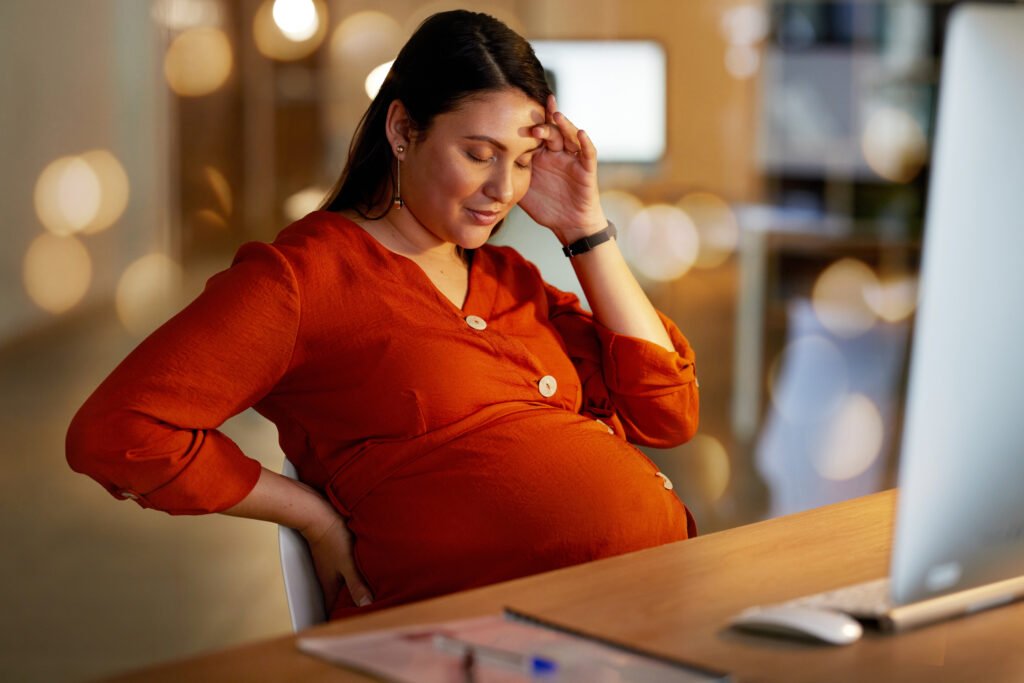
One of the most practical shifts that helps is lowering expectations without guilt. This sounds simple but emotionally it can be the hardest part. Many people try to push through, keep up the same workload, the same house standards, the same social life. Then the crash comes. This isn’t helped by the images of glowing women in every trimester that flow through your screen. Nobody wants to announce their pregnancy with a picture of them hunched over a bin, throwing up.
Giving yourself permission to do the minimum for a few weeks is not laziness, it is biology. A pregnant teacher once said, “I stopped trying to be impressive and just tried to be functional. That one mindset change saved my sanity.” Think survival mode rather than productivity. If dinner is toast, the house is messy and emails wait until tomorrow, that is genuinely okay. People who have been there do understand – those who haven’t don’t understand the intensity.
Realistic adjustments in response to pregnancy tiredness
Energy can also feel slightly more manageable with tiny, realistic adjustments rather than big lifestyle overhauls. Short daytime rests, even ten minutes with your eyes closed, can take the edge off. Keeping snacks nearby helps because low blood sugar often makes fatigue feel heavier.
Gentle movement, like a slow walk outside, sounds counter-intuitive when you are exhausted but can sometimes lift the fog just enough to get through the next hour. One parent described it perfectly: “I never felt energised exactly, but a five-minute walk made me feel less like a zombie and more like a tired human, which was progress.”
Work can be one of the biggest pressure points, especially if you are not ready to tell anyone you are pregnant yet. Quiet coping strategies become gold here. Sitting down whenever possible, blocking short breaks into your calendar, keeping water and snacks within reach and tackling the most important task at the time of day you feel least awful can all help.
Some people also find it useful to have a simple, neutral phrase ready if they are struggling. Something like, “I’m dealing with a health thing at the moment so I’m pacing myself a bit.” You do not owe anyone your full story before you are ready.

Loneliness in pregnancy
Emotionally, this stage can feel surprisingly lonely. Because early pregnancy is often private, people may be carrying intense exhaustion without much visible support. Hearing that others felt the same can be a huge relief. One mum shared, “I thought I was failing at pregnancy because all I could do was sleep. Then my friend said she once fell asleep on the kitchen floor in week eight and I felt instantly normal.” Normalising this level of tiredness matters. You are not weak. You are not dramatic. You are growing a human (and a placenta!) with microscopic building blocks and very limited sleep.
The reassuring part is that for many people, this extreme fatigue does ease as the second trimester approaches. Not always completely, and not for everyone, but often enough to offer hope on the hardest days. Until then, the most useful approach is usually a gentle one: rest where you can, ask for help where possible and treat yourself with the same kindness you would offer a friend in the same position. Early pregnancy can feel like a quiet endurance test, but you do not have to pass it perfectly. Just getting through is more than enough.
Read on to find out why pregnancy exhaustion is the real deal!
Why early pregnancy causes fatigue
Progesterone has a huge sedative effect and energy demands increase early in pregnancy. The body is working hard to support the early development of your baby, even if this is not yet visible. Think about the ebs and flows of your normal menstrual cycle as these hormones change. Pregnancy sees hormones rise significantly, so it’s no wonder a hefty dose of progesterone is throwing you towards those extra naps. Don’t forget, your body has to change and you have to build not only a baby but the placenta too – a whole new organ that you didn’t have before.
Fatigue can also be worsened by:
- Nausea
- Poor sleep
- Emotional adjustment
- Work and caring responsibilities
Put simply, it’s not easy at all. You have every right to be feeling like an early night. Again.
What normal pregnancy fatigue can look like:
Typical early pregnancy fatigue may include:
- Needing more sleep
- Feeling drained by simple tasks
- Difficulty concentrating / ‘brain fog’
- Needing daytime rest
This level of tiredness often improves later in pregnancy before reappearing in the 3rd trimester. Your routine antenatal appointments will usually involve the offer of blood tests at the booking appointment (approx 10 weeks) and usually at the 28 week appointment. Part of this test is to check for iron deficiencies. The NHS can offer further screening between 20 and 24 weeks for higher risk pregnancies or multiples. Do speak with your midwife if you feel you would benefit from further anemia screening.
Pregnant and tired with a toddler
It’s difficult enough to deal with pregnancy exhaustion when you don’t have a child to look after – throw another baby or toddler into the mix and it can be even more difficult to find the rest that you need. This is really about lowering your expectations entirely around what you can cope with over the next few months and tapping into as much support as possible from those around you.
This is not the time to be overly hard on yourself as a parent with regards to screen time and independent play. Think ahead and set up play activities that your child can access safely whilst you are lying on a sofa nearby. Allow for one more episode of Peppa Pig if it means you get another 15 minutes of rest.
Talk to your child, however young, about your changing body and the new arrival. They will understand more than you think and may begin to support you too, in their own unique way.
As parents we often fall into the trap of accepting support when we NEED it. But when you’re pregnant it’s wise to start to think about accepting help outside of those times when you need to be somewhere else. It’s ok to accept help so that you can rest too. Speak to family and friends to see if there are any times through the week when they may be able to support you in getting a little more rest than usual.
Work expectations and early pregnancy
Many people continue working while experiencing significant fatigue. Rest is not a luxury in early pregnancy, it is a physiological need.
If fatigue is affecting your ability to work safely, it is appropriate to seek advice from a healthcare professional. Speak with your workplace too about the possibility of additional breaks, different working patterns or home working. Risk assessments should be put in place during pregnancy in many industries, and these will often cover the need to reassess as your pregnancy progresses.
When fatigue may need assessment
Contact your GP or midwife if:
- Fatigue is sudden and severe
- You feel faint or short of breath
- Fatigue is accompanied by other concerning symptoms – you know your body best and so if you are concerned, you have every right to get checked out.
References and further reading
- https://www.nhs.uk/pregnancy/common-symptoms/tiredness/
Read more from Pregnancy Pal
-
Pregnancy Bra Fitting Guide: How to Get the Perfect Fit
If someone had told me that getting fitted for a bra would be one of the most helpful things in pregnancy, I might have blinked slowly and nodded while scrolling Instagram. But let’s be honest, when your body is doing the most dramatic redesign since puberty, a bra fitting in pregnancy moves from “optional” to…
-
Why Do My Breasts Hurt in Early Pregnancy?
Breast tenderness is often one of the earliest signs of pregnancy. For some people it is mild discomfort or an unusual tingling sensation around the breast, while for others it can feel surprisingly intense, making everyday movement uncomfortable. When this pain appears early on it can raise questions about what is normal and whether it…
-
Nausea relief in early pregnancy that’s backed by science
Nausea in early pregnancy can range from mild queasiness to symptoms that interfere with daily life. Despite being commonly referred to as “morning sickness”, nausea can occur at any time of day and may feel unpredictable. For some it comes and goes in waves, but for others there is a lasting sense of nausea throughout…