Early Pregnancy Headaches: Causes & Safe Relief
Headaches are one of those pregnancy symptoms that can catch you slightly off guard. Nausea? Expected. Sore breasts? You might have been watching out for those bad boys. But waking up with a thumping head for the third morning in a row can leave you wondering whether this is another pregnancy thing or something you actually need to worry about.
The reassuring news is that headaches can be common in early pregnancy. For many people they are mild and temporary, often linked to some of the enormous changes happening in the body during the first trimester. Hormones may play a part but so can the less glamorous realities of early pregnancy: feeling sick, eating differently, sleeping badly, drinking less and suddenly abandoning your usual coffee routine. Those two blue lines on the pregnancy test really do make you act differently and your body notices a slight change in your habits quickly.

The NHS advises that headaches are particularly common in early pregnancy and often improve as pregnancy progresses. There are, however, times when a headache needs medical attention. We’ll cover those clearly below, along with what causes early pregnancy headaches and what you can safely do to make yourself feel better if it’s deemed your headaches are a normal part and parcel of those less-than-glamourous early pregnancy symptoms.
If you are worried about a headache or feel generally unwell, contact your GP, midwife, maternity service or NHS 111 for personalised advice. This article is for general information and cannot tell you what is causing your individual symptoms.
Are headaches normal in early pregnancy?
Yes. Headaches in early pregnancy are fairly common and, on their own, are not usually a sign that anything is wrong. They can appear at any point during the first trimester. You might have one occasionally, notice a dull headache towards the end of the day or find that headaches suddenly seem more frequent than they were before pregnancy.
Pregnancy does not produce one particular type of headache either. Some people experience a familiar tension style headache, perhaps feeling like pressure around the forehead or temples. Others who already experience migraine may continue to have migraine attacks during pregnancy. Remember, seek medical advice if you are concerned about your individual health. Although pregnancy symptoms can often be compared in general, what is normal for one person isn’t always normal for someone else.
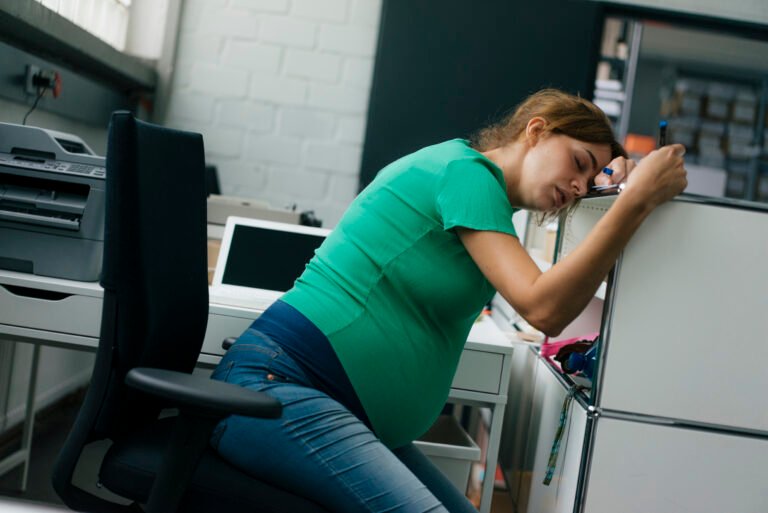
You may also simply feel a bit headachy alongside that general first trimester feeling of being completely wrung out. It is almost indescribable the level of tiredness you can feel in the early weeks. Combine this with the realities of going to work as usual, tending to other children and keeping up appearances socially and you’ve a recipe for a headache and an overwhelmed mind.
Your body is doing a fair amount of work during the first few weeks, long before there is much happening on the outside. If you are simultaneously exhausted, nauseous, struggling to eat normally and waking up twice a night to wee, there are plenty of everyday reasons for a headache to creep in too.

What causes headaches in early pregnancy?
There is not always one obvious cause. Hormonal changes are thought to contribute to headaches during the first trimester. Pregnancy also begins changing your circulation and blood volume very early on, while everything from your sleep pattern to the amount you eat and drink may look quite different even from as early as 4 weeks.
Hormonal Changes
Your hormone levels change dramatically during early pregnancy. These changes can contribute to headaches, particularly during the first trimester. It is the same hormonal upheaval responsible for many of the other early pregnancy symptoms you may already be experiencing.
If your breasts suddenly hurt when somebody so much as looks at them, your favourite dinner now smells revolting and you could cheerfully sleep for fourteen hours, pregnancy hormones are already making themselves well known.
Dehydration
Dehydration is another common headache trigger and early pregnancy can make it surprisingly easy to become dehydrated. Perhaps water suddenly tastes strange or drinking makes your nausea worse. You might be vomiting or simply drinking less because you are spending half the day feeling queasy.
Try sipping regularly rather than waiting until you feel really thirsty. If plain water has become thoroughly unappealing, other drinks can contribute to your fluid intake too.
The NHS specifically recommends drinking plenty of fluids to help prevent dehydration when managing headaches in pregnancy.
If sickness is making it difficult to keep fluids down, seek medical advice. Severe pregnancy sickness and dehydration may need treatment.
Not eating regularly
Early pregnancy eating can become chaotic surprisingly quickly.
You may wake up ravenous, feel sick by breakfast and then realise at 2pm that the only thing you have eaten all day is half a cracker.
Going for long periods without eating can trigger headaches in some people. This is particularly relevant if nausea, vomiting or food aversions are making your normal meals difficult.
Small, regular meals or snacks may be easier to manage than waiting until you feel hungry enough for a full meal.
If nausea is the main thing standing between you and food at the moment, our guide to nausea relief in early pregnancy explores some of the options that are actually backed by evidence.
Tiredness and poor sleep
There is tired, and then there is early pregnancy tired.
The first trimester can bring a level of exhaustion that feels completely disproportionate to what you have physically done that day. Add broken sleep, getting up to use the toilet, vivid dreams or simply lying awake thinking about pregnancy and your normal sleep routine can disappear very quickly.
Lack of sleep is a recognised headache trigger.
If exhaustion has hit you particularly hard, read Is It Normal to Feel Exhausted in Early Pregnancy? for more on why it happens and when it usually starts to improve.
Cutting down on caffeine
This one is easily missed.
If you were a committed coffee or tea drinker before pregnancy and drastically reduced your caffeine intake as soon as you found out you were pregnant, your headache may partly be related to caffeine withdrawal.
Caffeine withdrawal can trigger headaches and migraine in people who regularly consume it.
You do not need to remove caffeine completely simply because you are pregnant. NHS guidance currently recommends keeping your total caffeine intake below 200mg per day. Caffeine is not just found in coffee either. Tea, cola, energy drinks and chocolate can all contribute to your daily total.
If you need to reduce a high caffeine intake, doing it gradually may feel considerably kinder than going from several coffees a day to absolutely none overnight.
Stress and tension
Finding out that you are pregnant does not automatically transport you to nine months of glowing serenity.
You might be excited, frightened, distracted, worried about previous experiences or trying to act completely normal at work while mentally calculating how many weeks pregnant you will be at Christmas.
Stress can contribute to tension headaches, particularly when accompanied by tightness in the neck, shoulders or scalp.
Long periods at a screen can make things worse too. Taking regular breaks, moving around and consciously relaxing your jaw and shoulders may help if tension seems to be part of the problem.
What does an early pregnancy headache feel like?
There is no specific type of headache that confirms you are pregnant.
An early pregnancy headache might feel like:
- a dull ache across your forehead
- pressure around your temples1
- a tight or heavy feeling around your head
- an ache extending into your neck or shoulders
- throbbing or pulsing pain
- a migraine similar to migraines you have experienced before
A mild headache which improves after eating, drinking, sleeping or resting is generally less concerning than one that is sudden, severe, persistent or very different from headaches you normally experience.
That does not mean you need to decide for yourself which category a headache belongs in. If something feels wrong, particularly if the pain is severe or unusual for you, seek medical advice.
Can headaches be an early sign of pregnancy?
They can be associated with early pregnancy, but a headache is not a particularly useful way of working out whether you are pregnant.
Hormonal changes begin very early, so it is entirely possible to experience headaches around the time you discover you are pregnant.
The problem is that headaches are also extremely common when you are not pregnant.
Stress, tiredness, dehydration, illness, missed meals, caffeine changes, migraine and eye strain can all cause them too.
So if you are sitting there with a headache wondering whether it could be your first pregnancy symptom, the answer is technically yes, but it cannot tell you much by itself.
If your period is due or late, a pregnancy test will give you considerably more useful information than analysing whether today’s headache feels suspiciously hormonal.
You can also read our full guide to early pregnancy symptoms if you are trying to make sense of several changes at once.
Headaches at 4, 5 or 6 weeks pregnant
Search engines are full of very specific versions of the same question:
“Is a headache normal at 4 weeks pregnant?”
“Why do I have headaches at 5 weeks pregnant?”
“Are headaches normal at 6 weeks?”
The answer does not change dramatically from one week to the next.
Headaches can happen throughout the early weeks of pregnancy and there is no particular headache that you are expected to develop at week four, five or six.
At this stage, however, several headache triggers often arrive at once. Hormones are changing rapidly, nausea may be starting, tiredness can intensify and your normal patterns of eating, drinking and caffeine consumption may all have changed.
It is also a stage of pregnancy when you may not yet have seen a midwife or had a scan. That can make every new symptom feel particularly significant.
A headache does not tell you how well a pregnancy is progressing. Equally, if a headache is severe, persistent or worrying you, you do not need to dismiss it just because headaches can be normal in the first trimester.

How can I relieve a headache in early pregnancy?
Sometimes the most useful thing is to look at the basics first.
Have you drunk enough today? When did you last eat? Did you sleep badly? Have you spent five hours staring at your laptop? Are your shoulders practically touching your ears?
Trying a few simple measures may be enough to shift a mild headache.
Have a drink
Drink regularly throughout the day and pay particular attention to fluids if nausea has made drinking more difficult than usual.
If gulping a huge glass of water makes you feel sick, small regular sips may be more manageable.
Eat something
If it has been several hours since you ate, try a snack or small meal.
This does not need to be an Instagram worthy bowl of perfectly balanced pregnancy nutrition. If you are in the trenches of first trimester nausea, sometimes the food you can actually manage is the useful food.
Rest
If possible, step away from what you are doing for a while.
A dark, quiet room can be particularly helpful if your headache has migraine like features or you have become sensitive to light.
Sleep may help too, especially if you are already running on empty.
Try something cool
A cool flannel or cold compress against your forehead can feel soothing. Tommy’s includes cold flannels and cooling strips among the simple options that may help pregnancy headaches.
Take a screen break
Phones and laptops have a habit of becoming the default activity when we are lying down because we feel rotten, which rather defeats the point if eye strain or tension is contributing to the headache.
Put the screen down for a while if you can.
Your group chat will survive.
Can I take paracetamol for a headache in early pregnancy?
Yes. Paracetamol remains the first choice painkiller during pregnancy in the UK. NHS and MHRA guidance continues to recommend it when pain relief is needed during pregnancy.
Follow the instructions on the packet and use it for the shortest period you need it.
There has been some confusing coverage around paracetamol and pregnancy in recent years. In January 2026, the Medicines and Healthcare products Regulatory Agency (MHRA) reaffirmed its advice following a large review of the evidence and stated that paracetamol remains safe to use during pregnancy, with no evidence that taking it causes autism, ADHD or intellectual disability in children.
If you find yourself needing pain relief frequently, or your headaches keep returning despite paracetamol, speak to your GP, midwife or pharmacist rather than simply continuing to treat them yourself.
Can I take ibuprofen for a headache while pregnant?
Do not swap to ibuprofen simply because you are trying to avoid paracetamol.
The NHS advises that non-steroidal anti-inflammatory drugs (NSAIDs), which include ibuprofen, should generally be avoided during pregnancy unless they have been prescribed by a doctor.
The MHRA also advises pregnant women not to substitute ibuprofen for paracetamol.
The rules around some medicines can vary according to the stage of pregnancy and the reason they are being used, so your pharmacist, GP or maternity team is the right place to check if you are unsure.
Similarly, avoid taking aspirin for a headache unless a healthcare professional has specifically advised you to do so. This is different from the low dose aspirin some pregnant women are prescribed to reduce their risk of complications such as pre-eclampsia. If you have been prescribed aspirin during pregnancy, continue to take it according to the instructions from your maternity team.
What if I usually get migraines?
Pregnancy and migraine can be a slightly unpredictable combination.
Some people find their migraines improve during pregnancy, while others continue to experience them or occasionally develop migraine symptoms for the first time.
Migraine commonly causes intense throbbing or pulsing pain and may also cause nausea, vomiting, sensitivity to light or sound and, for some people, an aura such as flashing lights or other visual changes.
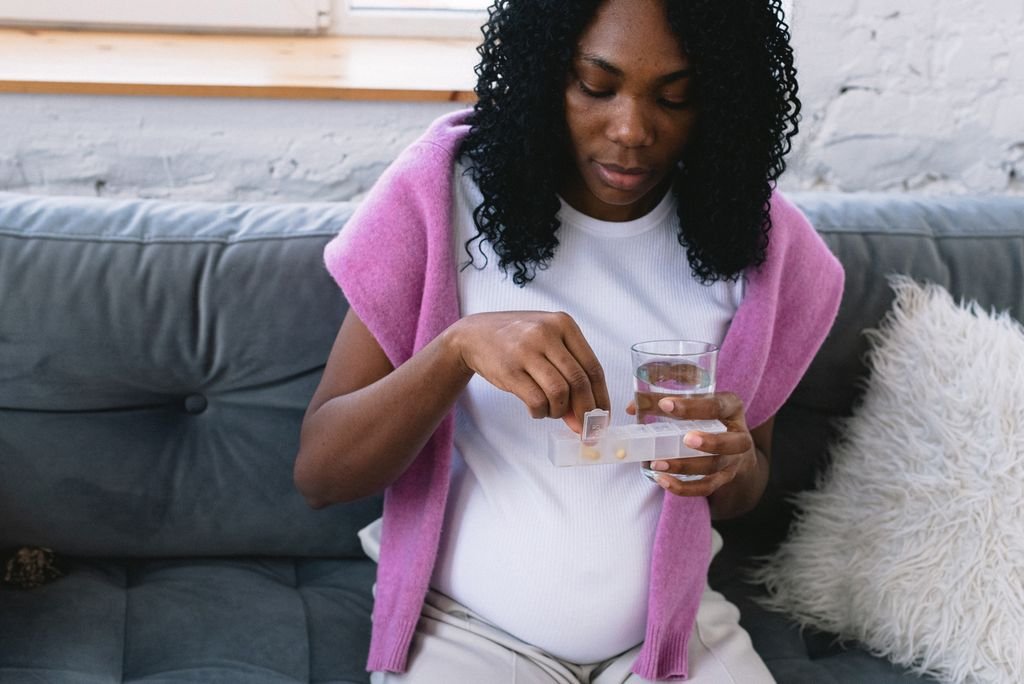
If you already take medication for migraine, speak to your GP, pharmacist or maternity team about what is appropriate during pregnancy. Do not assume you need to stop prescribed medication without checking first.
Some migraine medicines can be used during pregnancy when needed. For example, current NHS guidance states that sumatriptan can be used during pregnancy when necessary, although you should ask your doctor for advice about whether it is appropriate for you.
If you experience what appears to be your first migraine during pregnancy, or a headache feels significantly different from your usual migraines, get medical advice rather than automatically assuming it is migraine.
When should I worry about a headache in pregnancy?
Most early pregnancy headaches will not be caused by anything serious, but there are some symptoms you should not sit at home trying to Google your way out of.
The NHS advises contacting your maternity unit, GP or NHS 111 urgently if you have:
- a severe headache
- blurred vision, flashing lights or other problems with your vision
- pain just below your ribs
- vomiting
- a sudden increase in swelling of your face, hands, feet or ankles.
These can be symptoms of pre-eclampsia and need to be assessed.
You should also seek urgent medical help for a headache that comes on extremely suddenly and becomes intensely painful within minutes, or a headache accompanied by new neurological symptoms such as confusion, weakness, difficulty speaking or loss of vision. NICE recommends further assessment for sudden onset headaches and headaches accompanied by a new neurological problem.
You do not need to tick several boxes before asking for help. If your headache is severe, persistent, getting worse or simply feels completely out of character for you, contact a healthcare professional.
Can you get pre-eclampsia in early pregnancy?
This is often the frightening place an internet search for “headache in pregnancy” eventually leads.
Pre-eclampsia can cause severe headaches, but it usually develops after 20 weeks of pregnancy.
That means a headache at four, five or six weeks pregnant is far more likely to have another explanation than pre-eclampsia.
However, that does not mean a severe headache in early pregnancy should simply be ignored. Pre-eclampsia is not the only reason someone may need medical assessment. If you are seriously unwell, the headache is sudden or severe, or you have other worrying symptoms, seek advice regardless of how many weeks pregnant you are.
Why am I getting headaches every day in early pregnancy?
An occasional headache is one thing. Waking up with one every day can understandably start to concern you.
Recurring headaches can still have relatively straightforward triggers. If you are consistently dehydrated, sleeping badly, skipping meals, experiencing caffeine withdrawal or struggling with ongoing nausea, the same trigger may simply be there day after day.
But frequent headaches are worth discussing with your GP or midwife, particularly if this is new for you.
Rather than getting into a routine of repeatedly taking painkillers and carrying on, it is sensible to look at why the headaches are happening and whether anything else needs attention.
Keep a simple note for a few days if that helps. When did the headache start? What had you eaten and drunk? How much sleep did you get? What did the pain feel like? Did anything relieve it?
You do not need to become a detective about every twinge in pregnancy, but a little context can make a conversation with your healthcare professional much more useful.
The bottom line on early pregnancy headaches
Headaches are common in early pregnancy and, for most people, they are more uncomfortable than concerning.
Hormonal changes may contribute, while dehydration, nausea, missed meals, tiredness, changes to caffeine intake and tension can all pile into the mix too.
Start with simple things. Drink regularly, eat when you can, rest and step away from the screen. If you need pain relief, paracetamol remains the recommended first choice in pregnancy in the UK when taken as directed.
And perhaps most importantly, do not feel you have to convince yourself that a headache is “just pregnancy” if something feels wrong.
A severe, sudden or persistent headache, visual problems or other worrying symptoms deserve proper medical advice. Pregnancy already gives you plenty to second guess. Asking someone to check a symptom is allowed.
Frequently asked questions about headaches in early pregnancy
Are headaches normal at 5 weeks pregnant?
Yes, headaches can occur at around five weeks pregnant and throughout the first trimester. Hormonal changes, dehydration, tiredness, nausea, changes in eating patterns and caffeine withdrawal can all contribute.
A mild headache that settles with food, fluids, rest or appropriate pain relief is usually less concerning. Seek medical advice if the headache is severe, unusual, persistent or accompanied by other worrying symptoms.
Can a headache be a sign of pregnancy before a missed period?
A headache can occur during early pregnancy, but it is not a reliable way to tell whether you are pregnant. Headaches have many possible causes and can happen regardless of pregnancy.
If your period is due, a pregnancy test is a much more useful indicator.
Are headaches normal in the first trimester?
Yes. The NHS states that headaches can be common during early pregnancy and often improve as pregnancy progresses.
What can I take for a headache when pregnant?
Paracetamol is the recommended first choice painkiller during pregnancy in the UK. Take it according to the instructions and for the shortest period necessary. Speak to your pharmacist, GP or midwife if you are unsure what medication is suitable for you.
Why won’t my pregnancy headache go away?
There are many possible explanations, ranging from dehydration and lack of sleep to migraine or illness. A persistent headache should not simply be put down to pregnancy. Contact your GP, midwife, maternity service or NHS 111 for advice, particularly if it is severe, worsening or accompanied by visual changes or other unusual symptoms.
Read more from Pregnancy Pal
-
Giving Birth Abroad: From Uncertainty To Confidence For English Speakers In Spain
Giving birth can feel daunting even when you know exactly how the maternity system works. Add an unfamiliar healthcare system, different expectations and conversations happening in a language that is not your own and giving birth abroad can suddenly feel much more complicated. For the founder of Born in Trust, Titia Kesteloot, that experience became…
-
Is It Normal to Feel Exhausted in Early Pregnancy?
Exhaustion in early pregnancy can feel overwhelming. Many people are surprised by how intense fatigue can be, particularly in the first trimester. Feeling extremely tired in early pregnancy is common and usually linked to hormonal changes. Early pregnancy exhaustion is not the gentle sort of “I stayed up too late watching telly” tired. It is…
-
Pregnancy Bra Fitting Guide: How to Get the Perfect Fit
If someone had told me that getting fitted for a bra would be one of the most helpful things in pregnancy, I might have blinked slowly and nodded while scrolling Instagram. But let’s be honest, when your body is doing the most dramatic redesign since puberty, a bra fitting in pregnancy moves from “optional” to…